Tuesday, 10 January 2012

First steps to making beer


Today I made my first steps to actually producing something!  Well, not really, but I did get some good news for future alcohol production.  I received an email from James Robertson of the Tullibardine Distillery, and they have very kindly offered me ten kilos of malted barley that should have been destined for Scotch Whisky production, to make into beer.  As beer is (and I apologise for the crudity of this statement) a combination of malt, water, yeast and hops, the only other thing I needed were hops... and there aren't any around here to forage.  So it got me thinking, what can I use instead?

The Williams Bros brewery has been making Heather Ale, commercially, for years now, and so using this very Scottish plant instead of hops was always an option.  However, I thought I'd delve a little deeper into other possibilities and started scouring the default source of all information, the internet.  I found that plants like Milk Thistle and Wormwood were used before hops became popular, but they are not exactly easy to come by nowadays and besides, I wouldn't know a Milk Thistle if it was right in front of me.

More easy to source plants include Dandelions and Nettles, but as I am exceptionally sensitive to nettle stings I don't fancy wading into patches of the things without the levels of protection that people wear in a nuclear plant.  Another option is rosemary, and I could grow this quite merrily in pots outside my house, but the beer that interests me most is made with Spruce.
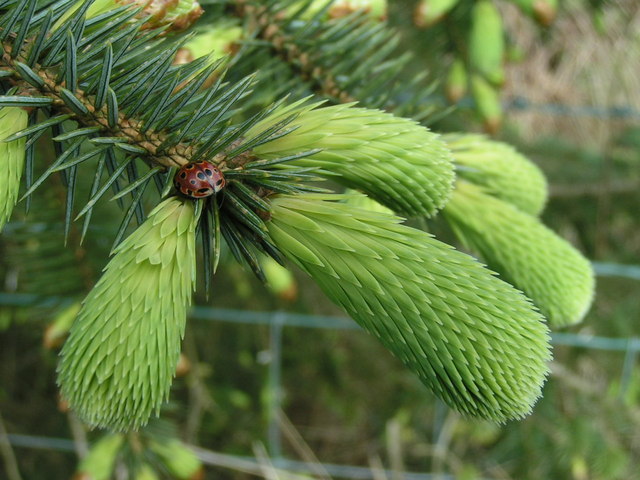
I found a website called Gourmet Underground Detroit, that has a spruce beer recipe, but most importantly, it makes it clear that no hops are needed.  The resulting beer is apparently quite citrussy and tart, so I am hoping it will be a lighter, refreshing type of beer.  I have found out that spruce beer can also have a darker, Cola like flavour and am assuming that this is due to later harvesting when the tips of the spruce are more resinous and woody.

There are quite a few spruce trees around the area I live, so the hope is that I can harvest them in a few months and start making my Tullibardine Malt Spruce Beer in the spring... 


Thursday, 5 January 2012

Pre-Christmas leftovers - Christmassy Bread & Butter Slice


I love spending time in the Cotswolds, and in the bakers there you often find a bread and butter slice – essentially a tray bake that uses up leftover bread that has a few raisins added into it.  It is deliciously moist and exceptionally tasty, but for some reason, frugal Scottish bakers haven’t cottoned onto the fact that you can use wasted stock to make this delicious sweet treat.

So embracing my idea yesterday of making things with pre-Christmas leftovers, I tried to make one of these bread & butter slices and put a Christmassy twist on it so it could be eaten as a snack or even for breakfast on Christmas day.

You need

1 Loaf of stale bread (white or brown, not seeded)
Some butter to spread on the bread
3 egg yolks
500mls milk
¼ cup caster sugar
Raisins or dried fruit
Ground Nutmeg
Ground Cinnamon

Here is what to do

Preheat the oven to 180c

Firstly, cut the bread into thick slices.  Leave the crusts on, as it gives it a more rustic slant.

Lightly butter both sides of the bread

Heat the milk in a pan until it is nearly at the boil

Meanwhile, whisk the egg yolks with the sugar and as much cinnamon and nutmeg as you desire until combined and put to one side.

When the milk is nearly boiling, pour onto the egg yolks and sugar and whisk to combine it all quickly.

Pour the mixture back into a pan and heat on a medium heat.

Stir constantly with a wooden spoon, cooking out the custard until the mixture coats the back of the spoon (I added a bit of cornflour because it was taking quite a while).

Pour the custard into a bowl and whisk to cool quickly and then transfer into a jug

Line a loaf tin with grease-proof paper and grease the inside.

Layer the bread in the bottom, add a small handful of raisins on top, and then pour some custard over the top.  Repeat until the bread & custard is all used up.

Place in the oven and cook for 35-45 minutes.

Remove from the oven and cool in the tin.

Turn out and slice and then eat.

Well – that is the theory.  Firstly, I forgot to grease the greaseproof paper, so when it came to taking the loaf out of the tin, the outer shell had welded itself to the paper and ripped off leaving the inner casing that looked as though I’d dropped it on the floor. Turning it upside down however made it look fine.


So presentation is terrible, but what does it taste like?  Well, essentially, Bread & Butter pudding, with a subtle nutmeg and cinnamon element coming through.  It was lovely and moist, with the custard flavour intensifying overnight.  Making a spiced custard works really well and I think if I’d soaked the raisins in rum and been a little more adventurous with the spices (infusing a clove in the custard would have been great), it would have made the whole thing taste much better and give a bit more of a Christmassy flavour.  I'll try this to make this again soon, and this time not muck it up.

Wednesday, 4 January 2012

Pre-Christmas Leftovers - Chicken stock


Using up leftovers at Christmas time is something everyone does.  The Turkey Curry/Chilli/Sandwich arrangement is something that everyone either enjoys or tolerates for the days following the big day.  After having a roast chicken on New Year’s Day, I realised that I could include things within the Christmas feast that would be utilising waste food from meals on the lead up to Christmas.  Instead of making things out of Christmas leftovers, making Christmas things from leftovers.

The most obvious starting place was stock – something I’ve never bothered making, and just bought good pre-made stuff.  Sure, a box of stock cubes don’t cost a lot, but with a £30 budget, it works out as a large percentage of my permitted money. I realised that if I have a roast chicken or beef joint in the couple of months before Christmas, I could make some stock out of the bones or carcass, and then freeze it to use at Christmas.  So, I decided to give it a shot with my roast chicken. 

I threw a the carcass, some leftover raw parsnips, some herbs (rosemary & thyme) a few cloves of garlic and a potato (I had it, and thought ‘why not’) and some peppercorns into a pan, three litres of water and turned on the heat.

I brought it to a boil, skimmed some scummy looking stuff off the top of the liquid and then turned down the heat.  Leaving it for four hours, skimming anymore scum that formed on the top when I saw it and then passed it all through a sieve. 

The stock tasted ok – it wasn’t fantastic, but I didn’t have a lot of ingredients to add flavour.  It was a bit watery and had a slightly oily element to it and I feel as though with more reduction, it certainly could be better.

So my first exploration into stock failed, but it gave me the notion that I’m going to have to explore using leftovers more.  I could confit meats that I don’t use, and if I shoot animals in the months prior to Christmas, I could preserve the meat I don't use from them.  Stuffing could be made out of leftover sausages that I’ve not eaten, and if I can master stock, it could be the basis for a soup for a starter. 

Bread is another thing that we all throw out, but I’ve discovered a fantastic way of producing a tray bake that uses old bread – sure, its not part of a Christmas feast, but with the right spices and it could be very Christmassy and be added to the festive table – maybe even as something for breakfast on Christmas morning!  I’m making it tonight and will let you know how it goes tomorrow!

Sunday, 1 January 2012

A harsh reality, five pounds & poop


So, the beginning of January is here and there is nothing to forage, I haven't learnt to hunt yet and still need to figure out my menu, so I’ve been thinking about the ingredients that I may have a problem sourcing. 

My first thought went to alcohol, and what I can do to achieve my goal of having beer at my feast.  Beer is a simple theory.  You need water, a starter yeast, some malted barley and hops.  When I actually get round to making the beer, I'll deal with the hops, but my brain went into overdrive today regarding the barley.

I spoke to a work colleague who is an amateur brewer and been advised that for around 20 litres of beer, I will need 5kg of malted barley.  So, malted barley – where can I get that?  I’ve been told that buying from brewery shops, it would cost £5 for the amount that I need.  “That is very reasonable, a fiver for twenty litres of beer” thought I, and there was the temptation to reach into my wallet and haul out a crisp note.  Then the realisation of my challenge set in.  It isn’t that I can’t afford five pounds for the barley, I can, but my budget doesn’t allow me to.

A fiver is a sixth of my total budget for every consumable item on my Christmas dining table.  I figure I’m going to have to buy things like dairy products, sugar, maybe some spices and these ingredients aren't cheap.  So not to eat up all the budget, I realised I am going to have to change my mindset as I simply cannot afford to spend this money on barley to make beer.  If I want beer, I am going to have to make it for free, and I'm also going to have to find a lot of things for free.

I also need to figure out how I can bottle this beer.  I have easy access to empty beer bottles, but I can’t seal those with caps unless I spend money on them – again, something I can’t afford, so I need to find a source of swing top bottles, like the ones that are used by Grolsch.  Any ideas folks?

On a positive note, I’ve had some advice regarding veggies.  Tim Butler who runs The Seafood Restaurant in St Andrews has suggested upturned grow bags for growing all the root vegetables that I will need.  With a little lateral thinking, I realized that can make my own grow bags.  There are many farms around where I live, and they have horses.  In the next few days (once the farmer’s new year hangovers have subsided) I plan to approach a few farms with the hope that I can clear out their stables and collect the horse manure.  Sure, it means scooping a lot of poop, but it contains the nutrients that potatoes and parsnips need.  Combining this with some soil and then filling the mix into jute bags will be my first step, before leaving for a few months to compost down.  Then, come the springtime, I should have a DIY grow bag in which to plant my root veg for Christmas.  As I’m going to have to grow these at the front of my house, half way up a cliff with a public footpath running by, the jute sacks will also look much better than a plastic grow bag and stop the local preservation society moaning that I'm making my house look messy - I hope!

Friday, 30 December 2011

Initial thoughts 4 - Gifts, decorations and cards


Another part of the challenge is gifts.  This past Christmas, I ventured into sewing, making my wife a cushion, and I thought that producing a range of homemade Christmas presents would be ideal.  My sister-in-law beat me to it this year, gifting us some delicious honey and spice nuts, apple jelly and some mincemeat, all the product of her own hands, so what I am going to attempt to do is learn various crafts and produce presents for my guests.

There will obviously be a cushion being made as there is no point in wasting the knowledge I already have, and edible gifts such as jam, chutney and preserved fruits will be involved as well.  Other things that I may venture into could be hot water bottle covers, biscuits, potted meats, candles, restored furniture, pot pourri… the list is endless and I’d welcome any home made gift ideas.  Email me here.

Christmas decorations are also needed to add to the festive cheer, so holly bushes, fir trees and pine cones are all things I will be marching into the countryside to halck down. I’ll also need a Christmas Tree and decorations so I feel that there may be some other skills I will need to aquire.    I’ll also need to make some Christmas cards, so I’ll be saving all this year’s that I have received to make sure I have some pictures to base my designs around. 

So these are all my initial thoughts.  A rough outline of what I need to do.  I’m taking tomorrow off from planning and on the first of January, I start planning properly and actually making things.  

Thursday, 29 December 2011

Initial thoughts 3: Fruit and booze


Fruit is both simple and tricky when you are trying to find things for free.  Obtaining apples and brambles is pretty simple as there are trees and bushes galore in the local area.  Plums are a little trickier, as although I know where there are plum (and damson) trees, they are on private property and I need the owner’s permission and will, of course, have to thank them for allowing me to gather their fruit.  Fortunately, a few pots of jam made from their fruit is always a good way to thank someone.

Similarly, there are dozens of rosehip bushes growing wild in East Scotland, so it is my plan to make some jelly with these, that might be ideal bartering currency or gifts for my dinner guests.

More problematic fruit are the dried varieties that are needed for the likes of Christmas Cake, Christmas Pudding and Mince Pies – three things that I have to produce to retain the traditional Christmas dinner.  Similarly, I am going to have to find nuts for the feast, and this could prove very tricky.  But the main thing I am worried about when it comes to Christmas is the drink…

Part of the reason that I am focusing foraging a Christmas dinner rather than becoming self sufficient, is that I have a normal job – I run a wine shop.  As I spend many hours there, I can’t devote lots of time to gardening, foraging and so my challenge has a reality to it, something that a lot of foraging or self-sufficiency blogs and shows don’t have.  However, there is a problem when it comes to the drinks over Christmas.  Soft drinks shouldn’t be a problem – elderflower or rose cordial is an easy option (I could use the roses that are growing up the front of my house) – but it is the booze that I’m nervous about.

I have, in the past, written some fairly damning pieces about commercial British fruit wines, but I am now going to have to venture forth and try and make some wine out of fruit that I find in the countryside.  I am also going to have to give beer or cider making a shot, which is again something I have not a clue about.  Now if I didn’t really care that much about alcohol, I would be able to produce some filth and just pass it off as ‘acceptable’ but there is a problem.  My guests are going to know that I’ve made this, and will be expecting the same levels of quality that I would demand from a commercially available product… all of a sudden, the critic has become the producer and that worries me a lot!

Wednesday, 28 December 2011

Initial thoughts 2: Where will I get the veggies from?


It is pretty easy to grow vegetables for a Christmas dinner.  Carrots, Parsnips and Potatoes are all very simple.  You dig a hole in the ground, plant a seed or a tuber, cover them up, water and leave them to it.  They pretty much grow themselves.  The problem I have is that I don’t have any land in which to plant root vegetables and you can’t have Christmas dinner without roast potatoes so I need to figure out how I’m going to get root veg.  Another ‘must have’ on the Christmas table is Brussels Sprouts and I haven’t a clue how I am going to find them.  There are plenty of farmers on the east coast of Scotland that grow sprouts, so maybe that may call for bartering.

I have a very good book on finding mushrooms, called Mushrooms by Roger Phillips and have already found a place where I know Chanterelle mushrooms grow.  There are also many other fungi in woodlands and on trees so I need to learn what is edible and what isn’t.  Due to the desire I have to not be poisoned by a rogue toadstool, I have every intention of finding a guide who can help me positively identify every mushroom I pick.  I’ll then (after having a few of them lightly fried on toast) learn how to preserve wild mushrooms for either use in the feast or give out as gifts.

Seaweed is in abundance on the east coast of Scotland, and with the help of the internet and a few books, I want to explore this massively unused source of food.  I am sure that by drying and rehydrating, they could provide a suitable alternative to cabbage or other green, leafy veg.  I have also heard that there is a lot of samphire on the beaches too, and I hope that I can find out what to do with this plant, that appears to be a staple on all Michelin star restaurant menus.

Herbs are the things that I don’t have a problem finding.  Aside from the two (small) rosemary plants that are already in my tiny flowerbed, I have a thriving sage plant and am going to plant various herbs in pots and keep them outside my house.  Sure, some may get pinched by the occasional passing rambler, or peed on by a passing dog, but such is the way with growing food!  I have heard that there is some wild garlic growing in a park in St Andrews, so hopefully that should provide me with some much needed flavouring.

I also have a chilli plant in my kitchen window that appears to continuously be producing fruit.  I’ve frozen some chillies grown from this plant, so may use those in the autumn months when I’m making preserves and chutneys.

I reckon that with a bit of lateral thinking I should be able to provide the necessary veg for a Christmas feast, even if it does mean bartering with allotment owners or farmers.  The next thing I need to figure out is fruit.

Tuesday, 27 December 2011

Initial thoughts 1: Where will I get the meat from?


What is going to be the centerpiece of my Christmas dinner?  Turkey is obviously out due to the decided lack of these silly looking birds wandering around central Scotland.  I could opt for Roe deer, of which there are plenty in the woodland surrounding town I live in, but that would be a hell of a big thing to kill when the nearest I’ve ever got to shooting a gun was a Super Soaker.  There are, however, a lot of birds in Fife, so this is where I am going to focus my attention.

It is a rare day that I don’t have to dodge a stupid pheasant that decides to run out in front of my car when I’m on my way to work.  Instead of braking or swerving to avoid it causing a bird shaped dent in the front of my car, maybe I should start aiming for them and cooking my kill.  Having said that, the thought of slightly squashed pheasant isn’t one that particularly appeals, but there is still the option of shooting them.

Failing that, there are a lot of ducks and geese that migrate over the estuaries that surround the Kingdom of Fife, so shooting a few of those out of the skies might be a way to a free feast. 

There are other sources of meat that roam around wild on the east coast of Scotland.  There are rabbits all over the place that could be picked off with an air rifle and made into something delicious.  Living on the coast, I can always take up fishing.  I’m forever seeing people dangling rods into the water off the pier outside my house so, obviously, there must be something worth catching in the briny deep.  There is a very buoyant crab and lobster fishing community in the village I live so, hopefully, I might be able to convince one of the fishermen to advise me on how to catch shellfish from the shore.  I think that if I can catch a lobster or crab, I can create some sort of shellfish starter for the meal.

So as you can see, there is a wide selection of wild animals available that I can catch and kill, once I have the skills to do so.  A couple of geese following a shellfish starter would be a pretty good Christmas dinner in anyone’s book, and all the more rewarding in that I will have got the ingredients for free. 

The problem I am going to have is getting the vegetables…